Commentary, news, and life in America's Parks

Featured Article


No one realized it at the time, but when a lightning strike ignited a single tree in Yellowstone National Park's Lamar Valley 20 years ago, it was a dire harbinger of what would become a historic fire season in the park.

The resulting fire, baptized the "Rose Fire" in honor of a nearby creek, went out on its own after flickering briefly in June. Though it burned just that one tree, the fire was ominous nonetheless.

You could say that the 1988 fire season in Yellowstone was surprising in that it followed a spring that saw precipitation levels range 150-200 percent above normal. The problem, though, was that when May turned to June the precipitation abruptly left -- it was almost as if Mom Nature twisted the garden spigot closed -- leaving behind lush vegetation that quickly dried out and would soon serve as incredible kindling when the high, dry heat of summer in the Rocky Mountain West set in.

That June of 20 years ago saw windy weather featuring daily high temperatures that routinely approached records, soaring day after day into the 90s. July continued the hot, dry, fiery weather, and August, if you could believe it, was even worse. At Mammoth Hot Springs, home to park headquarters, no precipitation was recorded in August. Never before in the park's weather records, which date to the 1890s, had the summer months ever been so dry.

Examine the park's time line for the summer of '88 and you'll see that fire activity in Yellowstone quickly ramped up under these conditions. Whereas just four small, seemingly inconsequential, fires were reported in June, eight were reported in July and they quickly grew into massive complexes named "Fan," "Mink," "Clover," and "Mist."

Smoke from these complexes billowed thousands of feet into the sky above Yellowstone and took on the appearance of massive thunderheads. They rained ash down on Cody 53 miles to the east of Yellowstone's East Entrance, and smoke drifted all the way cross-state to Cheyenne in Wyoming's southeastern corner nearly 500 miles away. Sunsets that summer in Cheyenne were spectacular, as the smoke and ash figuratively ignited the setting sun's rays.

In Cooke City, just outside the park's Northeast Entrance, fires raged in the mountains surrounding the small town that turned into a fire base. So dire were things at times that someone tinkered with a road sign on the edge of town, adding the letter "d" to the end of Cooke.

In the park, you couldn't escape the smoke. Rooms in the Old Faithful Inn and other lodgings provided little relief from the acrid fumes. Your hair and clothing quickly took on the smell of a campfire. The vistas were incredible, but not for the usual reasons. There were times when the drive between Canyon and Norris seemed as if you were running a gauntlet through the fires. Even though in some places the lodgepole pine forest was more than 100 feet from the roadway, you could feel the intense heat of the flames as they climbed into the forest's canopy and exploded. The snapping, popping, and crackling of the fires brought the scene even closer.

So dangerous did things become that rangers led convoys of visitors through the park, both to protect them from the fires and to keep them out of the firefighters' way. Those firefighters were easy to spot, as they wore bright yellow, fire-resistant "Nomex" shirts, dark green pants, heavy boots, and the sweaty grit of ash and dirt on their faces.

Safety helmets shielded their heads while pouches on their hips carried a personal survival tent, or fire shelter, that, believe it or not, is made from aluminum foil. Some firefighters carried incredibly long chainsaws for use in creating firebreaks.

At times the park took on the appearance of a battleground as helicopters -- more than a few piloted by Vietnam veterans -- flitted here and there carrying massive canvas water buckets that they dipped in the park's lakes to fill before returning to the front fire lines. Some helicopters were used to set back fires. Designed to burn up fuel in the path of a fire and so create a firebreak, these fires were created by the shooting from the air of what best can be described as napalm-filled Ping-pong balls.

Adding to the battleground appearance of Yellowstone that summer was the arrival of the Army. Troops from the 4th Battalion of the 23rd Infantry of the 111th Field Artillery based in Fort Lewis, Washington, descended on the park. Based in a tent city at the Madison campground with a view of National Park Mountain, the soldiers were schooled in building firebreaks while professional teams of "hotshots" had the nasty task of battling the flames. Fire stations from across the country contributed both firefighters and fire engines.

So massive was the firefighting effort that meteorologists were brought into the park to provide the most up-to-date weather conditions, information necessary to help fire bosses direct their crews.

August 20th was particularly hot and windy and soon became known as "Black Sunday" as the various fire complexes exploded, effectively doubling the acreage singed by flames to more than 480,000 acres. On September 7 a wave of fire swept the Upper Geyser Basin and only the courageous efforts of firefighters and park employees saved the Old Faithful Inn from catching fire from burning embers landing on its shingle roof. Some nearby cabins, however, were lost.

Wildlife seemed to take the fires pretty much in stride. While several hundred large animals (elk, bison, deer) died in the flames, countless photos were taken of bands of elk grazing in meadows while flames swirled in the surrounding forests. In some instances, the fires actually improved wildlife habitat by opening up meadows and producing lush vegetation.

Capitalism also accompanied the fires, as T-shirt makers rose to the occasion. While some shirts simply featured a large map of the park with the various fire complexes labeled, others were considerably light-hearted. ''Would the last one out of the park please put out the fire!'' asked one, while another featured a bear (presumably a grizzly) holding some bones and saying, ''Send more firefighters, the last ones were delicious!''

The media largely got the story wrong. While print reporters could explain in some detail what was transpiring, TV reporters sought out short sound bites and illustrated them with images of leaping flames. More than a few stories talked of the "destruction" of Yellowstone.

Despite the efforts of thousands of firefighters, it took nature, which came to the rescue with rain and even snow in early September, to finally douse the flames.

In analyzing the fire activity, researchers point not only to the hot, dry and windy weather of that summer, but also to the park's lodgepole forests, which at the time were considered to be of a mid-and-older age class. Most of the forests hadn't seen a considerable fire in 250 years or more, they said, and so were ripe to burn.

The fires also spurred debate about the National Park Service's so-called "let it burn" policy, under which fires that were naturally caused were generally allowed to burn untended, unless they threatened human structures. By July 21, though, fire bosses directed that all fires be battled.

As quickly as they burned, Yellowstone's forests also quickly came back to life. Even while fires were actively being fought in some parts of the park, other areas that had been burned were bursting with vegetation. Lodgepole pine cones are sealed with a sticky resin and actually need flames to open them so they can drop their seeds. So as the flames spread through areas, seemingly leaving them blackened and barren, they actually were reseeding the areas as they went. The result were tens of thousands of replacement trees that would sprout in the ensuing years.

Today you still can find some scars created by the 1988 fires. Some areas are recovering more quickly than others. Some you can hardly tell that fire swept through. As you tour the park, watch for roadside exhibits that explain what happened 20 years ago. Stop at the Grant Village Visitor Center, which has a nice exhibit on the role of fire in natural ecosystems.

Perhaps the greatest understanding to come away with, though, is that fire is a natural dynamic in Yellowstone's ecosystem, one that is necessary to maintain that ecosystem's health.

Facts About the 1988 Fires
* 9 fires caused by humans; 42 caused by lightning.

* Fires begun outside of the park burned 63 percent, or approximately 500,000 acres, of the total acreage.

* In Yellowstone National Park itself, the fires affected—but did not “devastate”—793,880 acres, or 36 percent of total park acreage.

* About 300 large mammals perished as a direct result of the fires: 246 elk, 9 bison, 4 mule deer, 2 moose.

* The 1988 fires comprised the largest fire-fighting effort in the United States up to that time:
—$120 million spent fighting the fires.
—25,000 people involved in these efforts.

* After July 21, park managers ordered that all fires be fought, including natural fires that had been allowed to burn.

* Firefighters saved human life and property, but they could do little to control or stop the fires because weather and drought made the fires behave in unusual ways.

* Contrary to what was feared, the fires of 1988 did not deter visitors. In 1989, more than 2,600,000 people came to Yellowstone—the highest annual visitation of the 1980s.

What scientists have learned

* Temperatures high enough to kill deep roots occurred in less than one-tenth of 1 percent of the park, where conditions allowed the fire to burn slowly for several hours. If water was available, new plant growth began within a few days.

* Plant growth was unusually lush in the first years after the fires because ash was rich in minerals and more sunlight reached the forest floors.

* About one-third of the aspen in the northern range burned in the 1988 fires—but the aspen stands were not destroyed. Fire stimulated the growth of suckers from the aspen’s underground root system and left behind bare mineral soil that provided good conditions for aspen seedlings.

* Aspen seedlings also appeared throughout the park’s burned areas, becoming established where aspen had not been before.

* Burned pine bark provided nutritious food for elk in the first years following the fires.

* Many of the forests that burned in 1988 were mature lodgepole stands, and this species is recolonizing most burned areas. Other species—such as Engelmann spruce, subalpine fir, and Douglas-fir—have also emerged.

* About 24 percent of the park’s whitebark pine forest burned in 1988. To study what would happen after the fires, scientists set up 275 study plots. By 1995, whitebark pine seedlings had emerged in all the plots.

* The fires had no discernible impact on the number of grizzly bears in greater Yellowstone.

* In a study from 1989–92, bears were found grazing more frequently at burned than unburned sites, especially on clover and fireweed.

* Fires burned through areas surrounding Yellowstone and Lewis lakes, but scientists found no significant changes in fish growth in streams and rivers flowing into or out of these lakes.

* The moose population has dropped in Yellowstone, in part because of the loss of old growth forest during the 1988 fires.

The Latest News & Views

Saturday, July 5th, 2008

Public access to the observation deck in the Statue of Liberty’s crown has been banned since September 11, 2001, for safety and security reasons. In response to loud protests, Congress has ordered a study to determine if crown access can be made safe.
Walter Gropius, founder of the influential German Bauhaus school of design, implored the managers of the brand new Cape Cod National Seashore to design facilities, such as visitor centers and bathhouses, with an innovative approach. Rustic cabin design found in Western national parks wouldn’t work here, but Modern design featuring modest scale and a light footprint on the land would.

Friday, July 4th, 2008

Interior Department officials have agreed to extend through July the comment period on a proposal to allow visitors to national parks to carry guns.
As energy prices creep steadily higher, there's a growing segment of America that believes short-term relief can literally be tapped from fossil-fuel resources in the Western states. But many of those resources are found on public lands that buffer national parks, national wildlife refuges, and wilderness areas, and their development could have dire consequences for those landscapes.

Thursday, July 3rd, 2008

The Battle of Gettysburg, a famously important Union victory, ended 145 years ago on July 3rd. We can more clearly appreciate what happened at Gettysburg by visiting Gettysburg National Military Park and trying to understand the battle as a human experience, not just a mammoth clash of arms.
If you went to Yellowstone National Park in June, you weren't alone. The park saw record visitation last month as more than 610,000 folks made their way to Yellowstone.
Two fiercely competitive speed-climbers have regained the Nose Route record the Huber brothers wrested from them on El Capitan last October. The new record for the Nose, a big-wall climb that normally takes three or more days to complete, is two hours, 43 minutes, and 33 seconds. While admirers rave, critics grumble.
Little Bighorn Battlefield National Monument and Pu'uhonau o Honaunau National Historical Park both celebrate birthdays in July. These two parks were renamed for cultural-political reasons, underscoring the importance of labels and the need to respect native peoples.

Wednesday, July 2nd, 2008

A bipartisan group of U.S. senators has gone on record with the director of the Environmental Protection Agency that they will find legislative solutions to provide clean air over national parks if his agency can't protect those airsheds.
If you're not interested in heading to Paradise, you can always go to Sunrise at Mount Rainier National Park. Located on the volcano's eastern flanks, the Sunrise area opens for the summer on July 3.
It took longer than usual, but the Going-to-the-Sun Road in Glacier National Park has been opened from end-to-end.
National Public Radio is on the road in the National Park System this week, visiting both iconic and obscure parks. But is there a chink in NPR's coverage?
With the July Fourth celebration in the offing, we naturally turn our thoughts to national parks commemorating events and people associated with the struggle for independence. This week’s quiz accordingly focuses on the American Revolution. Answers are at the end. No peeking, please.

Tuesday, July 1st, 2008

Northern elephant seals are huge marine animals, with males weighing more than two tons. Point Reyes National Seashore is a great place to view these animals, but not in summer. Rather, come either late or early in the year when the seals congregate on the seashore's beaches to breed and give birth.
Haleakalā National Park celebrates its 92nd birthday on July 1. Meanwhile, angry Hawaiian Natives continue their struggle to prevent the construction of a giant telescope atop their sacred mountain. The Park Service doesn’t like the project either.
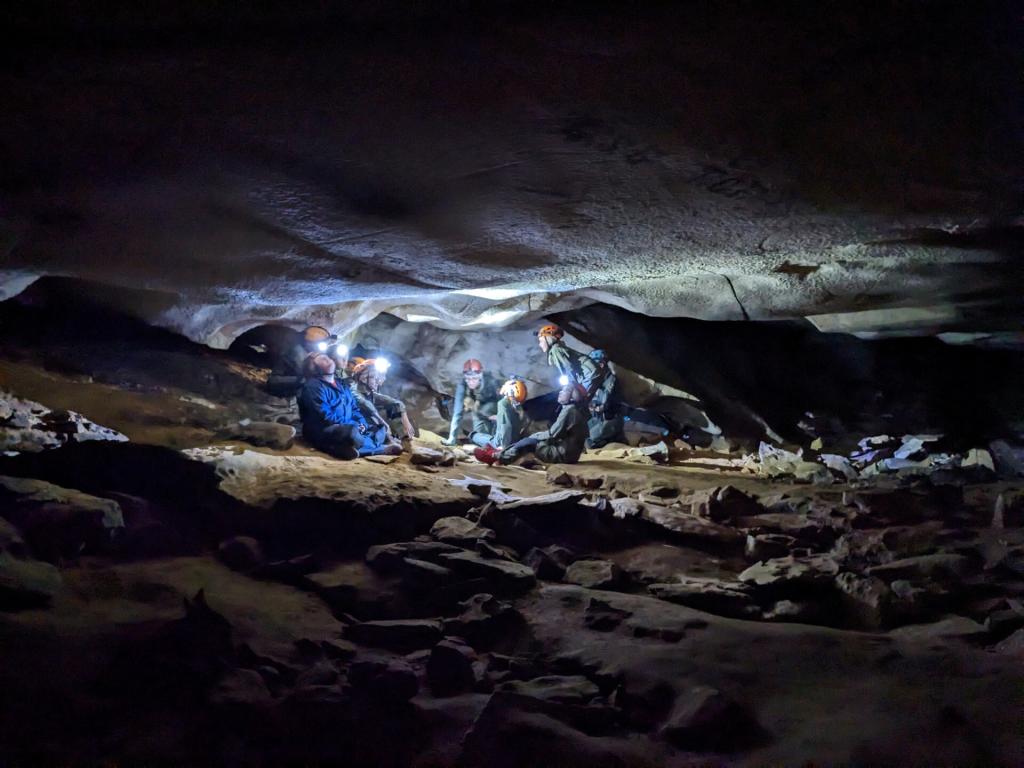
Long before anyone thought of national parks, folks were heading down into Mammoth Cave to see the sights. And if you've ever visited this incredible underground labyrinth, you'd understand why.

Monday, June 30th, 2008

Grizzly bears and wolves don't always get along, but as this video footage obtained by USGS researchers in Glacier National Park demonstrates, sometimes they will tolerate each other.

Sunday, June 29th, 2008

What is it that intrigues us so about Olympic National Park? To be sure, the park's multiple personalities are alluring. There aren't many national parks that can lay claim to not just sea coast and rain forest but also glacier-coated peaks worthy of mountaineering.
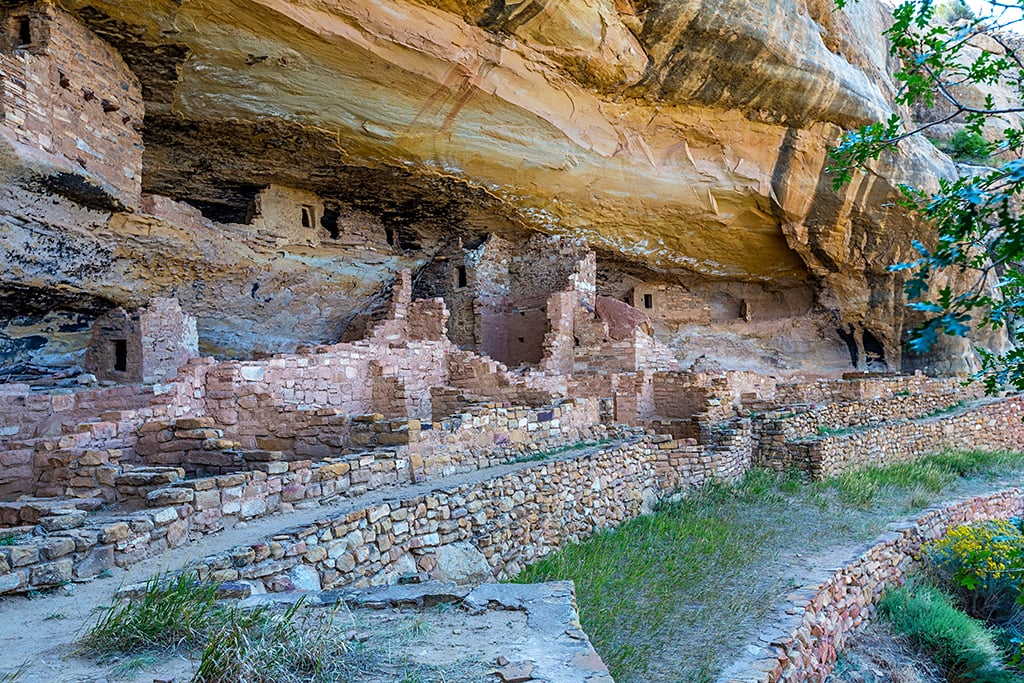
Colorado’s Mesa Verde National Park celebrates its 102nd birthday on June 29. Mesa Verde's 4,000+ archaeological sites document a culture that flourished for centuries before the last generation abruptly and mysteriously abandoned its ancestral home. Did you know there might not have been a Mesa Verde National Park at all if it hadn’t been for Virginia McClurg?

Saturday, June 28th, 2008

George Hartzog, long revered by many in the National Park Service for the way he managed the agency and defended the National Park System, has died. The seventh director of the agency and the first to be fired, passed away Friday.
National Geographic might be considered a gold standard authority on national parks. Why, then, is a hilariously flawed “10 Best National Parks” list included in a recently published National Geographic book? Is NG testing us to see if we’re paying attention?

Friday, June 27th, 2008

Curious to see what it looks like when a bison tosses a visitor who gets too close in Yellowstone National Park? Check out this video.
A 12-year-old Pennsylvania boy has been hospitalized after a Yellowstone National Park bison, evidently perturbed that he was part of a family photo shoot, tossed the boy about 10 feet into the air.
Best laid plans literally have gone up in flames in Grand Canyon National Park, where a prescribed fire has blown out of control. The Walla Valley Fire on the park's North Rim is burning across 225 acres and is just 15 percent contained. It's located about 9 miles west of the North Rim's developed area.
A friends group is forming to support Theodore Roosevelt National Park. The group, Friends of Theodore Roosevelt National Park, is holding an organizational meeting on Sunday, June 29.